
20 Sep 2026 · Plotfolio
The Anatomy of Abuja’s Expansion: How Infrastructure Catalysts Create Generational Wealth in Satellite Corridors
An analysis of how Abuja grows, how to identify infrastructure inflection points across FCT corridors, and how active exit and reinvestment strategies compound land wealth.
Advertisement
Most investors look at real estate as a product. The most profitable investors look at it as an economic sequence.
Abuja is not expanding randomly. Unlike cities that grow organically without a master layout, the Federal Capital Territory was designed around a defined radial expansion model.
When you understand the mechanics of how the FCT expands from Phase 1 outward into the satellite corridors, land acquisition stops being a speculative gamble and becomes a calculated financial move.
Here is how Abuja’s growth engine actually works—and how to position your portfolio before the market catches on.
---
1. The Saturation Curve: The Migration from Core to Corridors
In the early 2000s, districts like Maitama, Wuse II, and Garki represented the core of commercial and residential life. As these Phase 1 districts reached near-zero greenfield availability, capital moved naturally into Phase 2—districts like Jabi, Utako, and Gudu.
Today, Phase 2 and prime Phase 3 districts (such as Guzape and Mabushi) are largely mature, high-capital zones. For an investor entering the market today with a growth objective, buying fully built-up land in core districts delivers stability, but limited room for multiple-fold capital compounding.
The dynamic capital growth in Abuja is occurring along three primary expansion corridors:
- The North-West Corridor (Karsana, Kubwa Expressway, Bwari Axis): Driven by arterial highway expansions and proximity to major commercial hubs.
- The South Corridor (Kabusa, Ketti, Sheretti): Expanding rapidly due to central proximity and master-planned residential district layouts.
- The South-East Corridor (Apo, Wasa, Karshi Axis): Unlocked by major road infrastructure linking the outer districts directly back to the central business district.
---
2. The 4-Stage Infrastructure Inflection Model
Land value in an emerging Abuja corridor does not appreciate in a straight diagonal line. It moves in distinct steps triggered by municipal infrastructure:
`` Stage 1: Master Plan Layout & Cadastral Demarcation Stage 2: Arterial Road Grading & Route Clearing (The Inflection Point) Stage 3: Asphalt Paving & Utility Grid Extension Stage 4: Private Developer Clustering & Neighbourhood Infill ``
- Stage 1 (Raw Layout): Low entry pricing, highest friction. The land is legally demarcated, but physical access is raw.
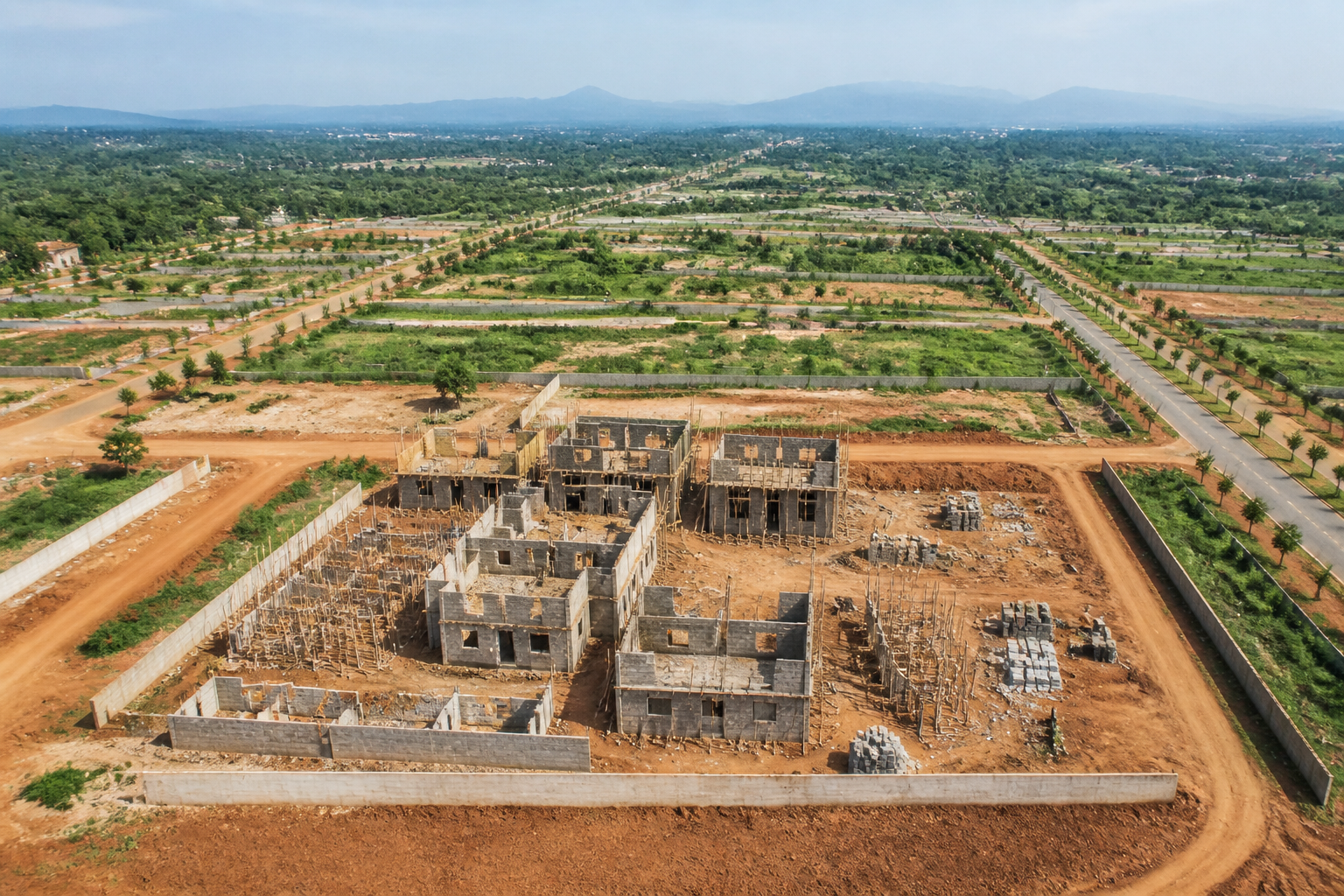
- Stage 2 (The Inflection Point): Heavy machinery breaks ground on the main access highway or arterial link. This is the optimal window for land-banking: the corridor’s trajectory is confirmed, but retail buyers have not yet flooded in.
- Stage 3 (Asphalt & Utilities): Road paving is complete. Commute times drop immediately by 40–60%. Entry pricing jumps substantially.
- Stage 4 (Infill & Maturation): Gated estates emerge, commercial services follow, and land transitions from an investment asset to an end-user development site.
Investors who wait for Stage 4 pay retail prices. Investors who identify Stage 2 capture the entire infrastructure dividend.
---
3. The Flaw of "Buy and Forget"
The traditional Nigerian approach to land banking has always been passive: buy a plot, put a beacon on it, and look back in fifteen years.
While land rarely depreciates, passive holding has three major vulnerabilities:
- Opportunity Cost: Capital sits idle in a corridor that has already peaked in annual appreciation while adjacent corridors are entering their highest-growth phase.
- Encroachment & Post-Purchase Friction: Abandoned plots without active management create boundary and community issues.
- Unrealised Capital: Wealth on paper does not compound unless it is strategically harvested.
---
4. The Exit and Reinvestment Engine: Compounding Land
At Plotfolio, we advocate for active land portfolio management. The goal is not merely to own land—it is to compound square metres and capital over time.
Here is how an Exit and Reinvestment strategy works in practice:
- Strategic Acquisition: Acquire vetted, statutory land in a Stage 2 corridor at optimal cost basis.
- Active Tracking: Monitor corridor milestones—such as dualisation projects, bridge completions, or commercial zoning shifts—through a live dashboard.
- Targeted Exit: As the district approaches Stage 4 and yields begin to flatten, exit the plot to end-user developers who are willing to pay a premium for ready-to-build sites.
- Capital Redeployment: Redeploy the capital into larger acreage across the next emerging Stage 2 corridor.
By cycling capital out of mature districts and into early-stage infrastructure corridors, one initial land allocation can systematically compound into a multi-plot portfolio over an investment horizon.
---
Strategic Questions Before You Allocate Capital
Before purchasing land in any expanding Abuja district, ask three structural questions:
- What is the immediate infrastructure catalyst? (Is road construction actively funded, or is it a conceptual proposal?)
- What is my cost basis relative to surrounding districts? (How does this corridor's price per square metre compare to the adjacent mature district?)
- What is the exit path? (Will this land sell to an individual homebuilder, an institutional developer, or a commercial enterprise?)
When your decisions are backed by geographical realities and infrastructure data, Abuja real estate becomes a dependable wealth engine.
---
Build Your Abuja Land Portfolio With Structure
Plotfolio provides institutional-grade land banking and portfolio management for Nigerian professionals and diaspora investors. From cadastral vetting to active milestone tracking and strategic exits, we manage the entire lifecycle of your land holdings.
👉 [Connect with a Plotfolio Advisor on WhatsApp](https://wa.me/2348125229157?text=Hi%20Plotfolio,%20I%27d%20like%20to%20speak%20with%20an%20advisor) to discuss vetted opportunities across Abuja's primary growth corridors.
Advertisement